Pull up a chair, grab a controller and fill the mini fridge with Monster!!
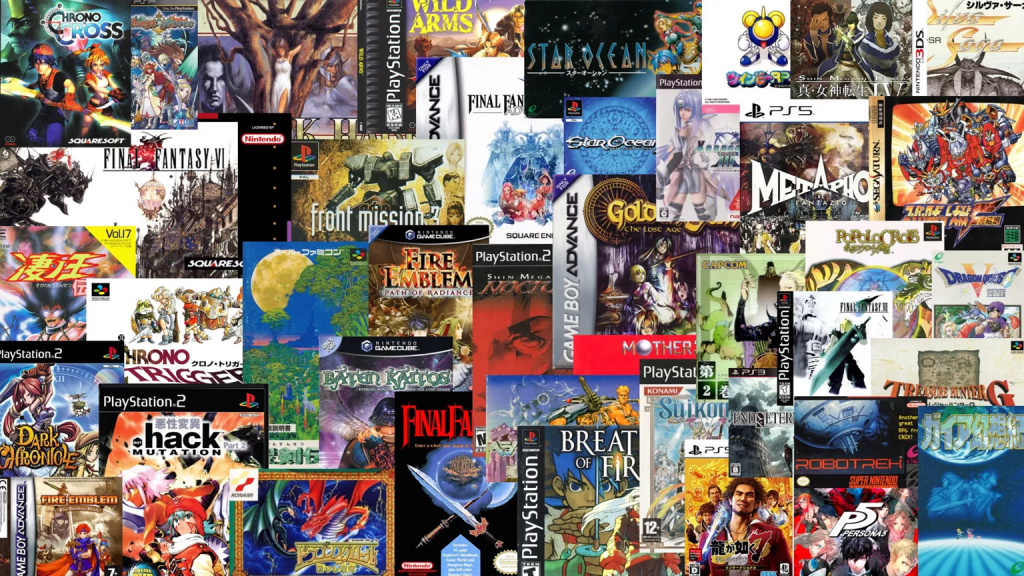
because today we’re diving into some JRPG nostalgia royalty. If you’re like me, you grew up with those chunky cartridges and discs that transported you to massive worlds full of epic tales. As a true testament to the writers and creators of this mind opening genre where JRPGs really hit their stride, these games didn’t just have pixels; they had heart, depth, and expansive maps that got on its knees and begged you to explore every nook and cranny. I’ve scoured rankings like IGN’s 2025 top JRPG list and fan favorites and also to use my expansive history in gaming, and expertise in RPGs, to pick the absolute best five for killer storylines and wide-open worlds. We’ll break down why they rock, then shout out a couple honorable mentions that are just as worthy, just barely got edged out. This shouldnt take too long, as I severely constrained myself, because I could write a 1000 pg book… So let’s skin this smoke wagon and see what happens!
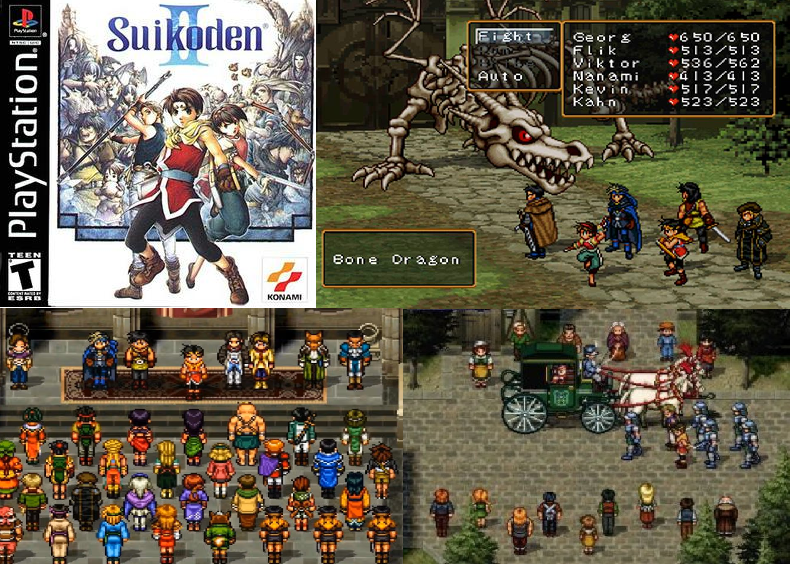
No. 5: Suikoden II (1998, PS1)
Ah, Suikoden II: man, this one’s a hidden gem that punches way above its weight. Picture this: you’re a young hero caught in a brutal war between nations, recruiting 108 unique characters, ONE HUNDRED AND EIGHT!!! Deserved spelling out! Each with their own backstory, to build a rebel army. The storyline? It’s all about politics, betrayal, and the human cost of conflict, with gut-wrenching moments like losing friends or uncovering family secrets. It’s inspired by ancient Chinese literature, but it feels so personal, like you’re piecing together a massive puzzle of alliances and heartbreaks. There is no wonder it’s topped many lists for PS1 storylines. I agree for its insertion, although I don’t put it as high as others do…
How about the expanse of the world? Huge and inviting. Your headquarters castle grows as you recruit more folks, unlocking new areas, minigames, and side quests. The overworld map spans continents with rivers, mountains, and hidden spots – think strategic army battles on a grand scale mixed with intimate, deep explorations. It’s not fully seamless like modern “open” worlds, but it gives you actual freedom to wander, discover runes for magic, and feel like your choices expand the universe. If you love stories where every character matters and worlds that evolve with you, this is it.
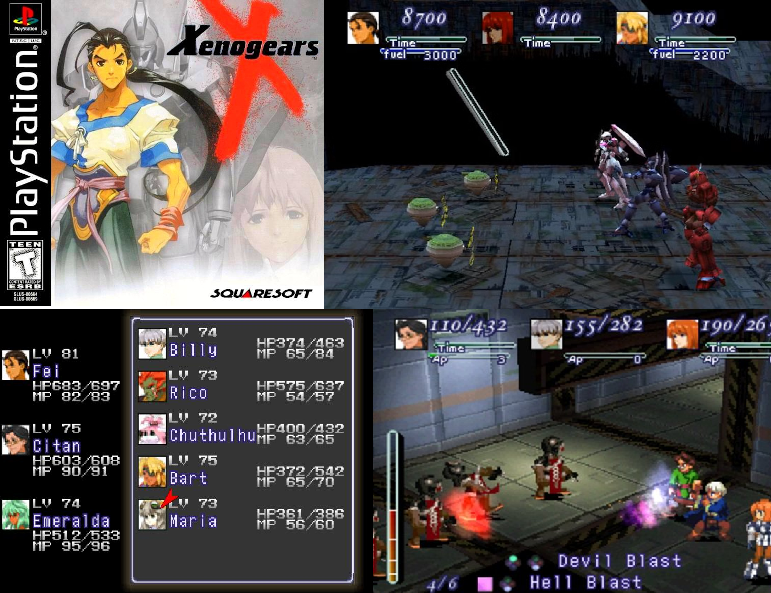
No. 4: Xenogears (1998, PS1)
Okay, buckle up because Xenogears is like a philosophy class wrapped in a mech-fighting epic. You play as Fei, a guy with amnesia unraveling his past in a world blending sci-fi, religion, and psychology—think reincarnation, god-like beings, and existential crises that span thousands of years. The story is dense, with twists that question reality itself, drawing from Freud, Nietzsche, and biblical lore. It’s ambitious, sometimes rushed in the second disc, but those narrative bombshells? They stick with you forever, making it a standout in IGN’s all-time rankings.
The open world amps up the awe: massive continents with deserts, oceans, and floating cities, traversable on foot or in giant gears (mechs) that let you smash through barriers or fly to secret areas. Dungeons are puzzle-heavy towers and ruins packed with lore, encouraging backtracking for hidden bosses and upgrades. It’s got that sense of scale where exploration reveals story layers, like ancient artifacts tying into the plot. If deep, mind-bending tales and worlds that feel cosmically vast are your jam, Xenogears is a must.
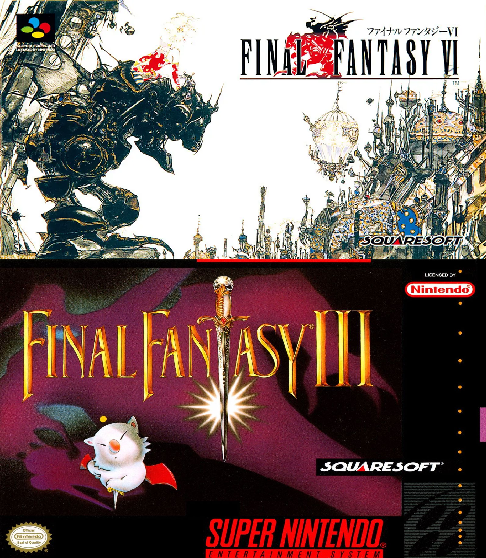
No. 3: Final Fantasy VI (JPN)(SFC)/ Final Fantasy III (US) (1994, SNES)
Now we’re hitting the SNES classics with Final Fantasy VI – and what a gold mine of RPG goodness! This one’s got an ensemble cast of rebels fighting a mad empire, but it dives into themes of loss, redemption, and apocalypse. The villain, Kefka, is a chaotic joker who actually succeeds in destroying the world midway through, flipping the script into a non-linear quest to rebuild. Each character’s arc, like Terra’s identity struggle or Cyan’s grief, feels raw and emotional, with opera scenes and betrayals that hit like a truck. The combination of the emotions and openness put you right in the world and in these characters boots! It’s often called the peak of 2D storytelling.
The world design? Genius. The first half is linear to begin with to give you the gravity of the situation, but post-apocalypse, it opens wide: grab an airship and roam a shattered map full of optional islands, hidden espers for magic, and side stories that flesh out the lore. Exploration rewards you with powerful gear and character growth, making the world feel alive and reactive. For an SNES game, the scale is insane – think steampunk cities, floating continents, and secrets everywhere. It’s the blueprint for open-world JRPGs with heart. It just goes to show you, when you actually care and aspire for innovation, you can make a masterpiece on any platform. Its a shame they have all been on autopilot for decades…
No. 2: Final Fantasy VII (1997, PS1)
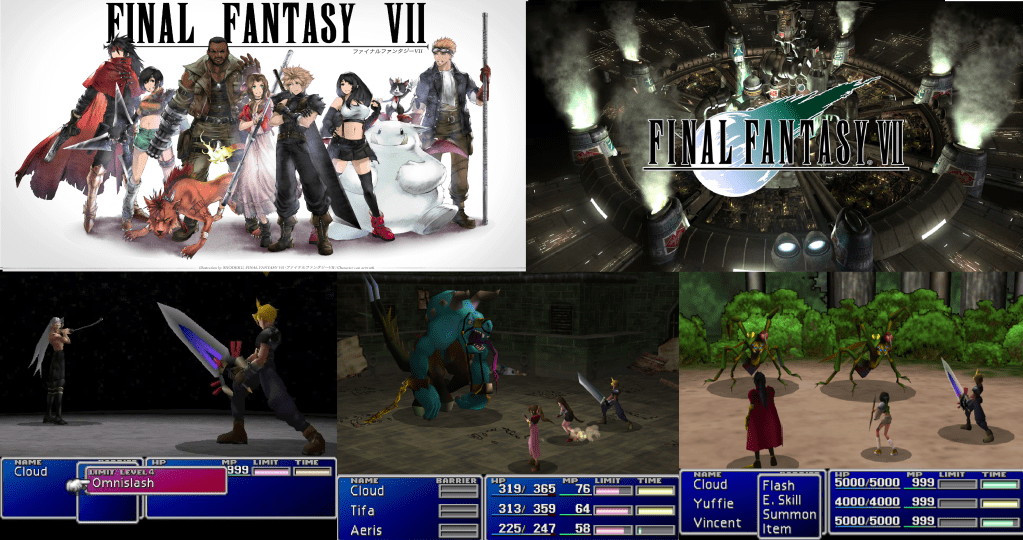
Come on, you knew this was coming – Final Fantasy VII, the game that put JRPGs on the global map. Cloud Strife’s journey as a mercenary turned eco-warrior against the evil Shinra corporation is legendary, tackling environmentalism, corporate greed, and personal trauma. Those iconic twists, like Aerith’s fate and Sephiroth’s menace, blend high fantasy with cyberpunk in a way that’s still unmatched. The characters’ backstories unfold through flashbacks and choices, creating a narrative that’s emotional and replayable.
And the open world? Epic. Once you get the Highwind airship, the 3D map lets you soar to hidden continents, chocobo farms for breeding, and minigames like snowboarding or submarine battles. Towns bustle with secrets, materia caves hide powerful spells, and the world’s lore, ancient Cetra ruins, the Lifestream, rewards the curious grinder. It’s more boundless than today’s games, and it nailed that sense of adventure and discovery. No wonder it’s a staple in best-of lists for PS1 eras, even all eras.
There is a reason this game has a laundry list of sequels / prequels! These include games: Before Crisis, Dirge of Cerberus, Dirge of Cerberus Lost Episodes, Crisis Core, and a full 3 part remake – Movie: Advent Children – Novels: On the Way to a Smile… Let alone the mass amount of toys, statues / statuettes, soundtrack / music albums, and tons of other commercial paraphernalia. This would be No. 1 if it were just for story depth and longevity!
No. 1: Chrono Trigger (1995, SNES)
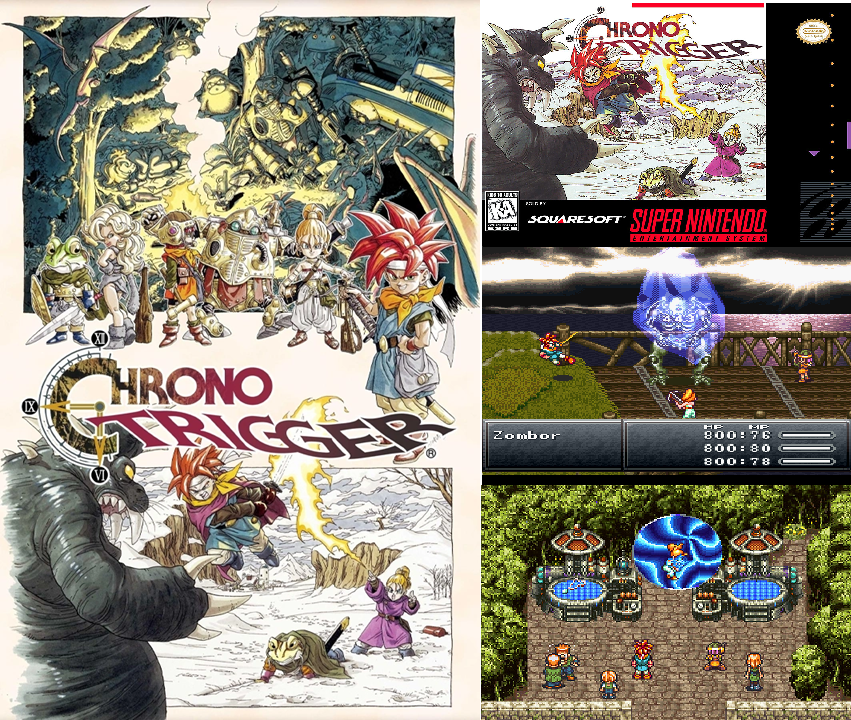
Drumroll, please!!! Chrono Trigger takes the crown, and honestly, it’s no contest. This time-travel saga follows Chrono and pals jumping eras to stop a planetary disaster, with a story full of branching paths, 13 endings, and themes of fate, friendship, and consequence. The writing is tight, with memorable moments like dinosaur chases or medieval trials, and characters who grow through your choices. It’s collaborative genius from the Final Fantasy and Dragon Quest teams, topping IGN’s 2025 list for good reason.
The “open world” twist? Time gates let you warp between prehistoric jungles, futuristic domes, and apocalyptic wastelands, altering history to unlock new areas and quests. Exploration is key – side missions actually change outcomes, hidden techs combo in battles, and the map encourages experimentation without grinding. For its time, it’s incredibly free-form, blending linearity with boundless replayability. If there’s one JRPG that defines epic stories and explorable worlds, it’s this.
This game just barely inched out Final Fantasy VII, mainly for its innovative thinking and creation. Again, realistically, they are a dead heat. No one wants a tie though, so here we are…! With large amount of side quests, being able to bounce to different timelines, the expansive battle system, and diverse character line up, all done within the constraints of the SNES platform, snuck it in at 1st. Trust me, this hurts me more than it does you. There is the warmest places in my heart for FFVII
A Quick Shoutout to the Honorable Mentions
These two didn’t quite make the top five but deserve your time for their unique greatness.
First, EarthBound (1994, SNES):
This quirky adventure flips the script with a modern American setting—think fighting aliens as a kid with psychic powers. The story satirizes society with humor and horror, like battling cultists or sentient puke, but it gets deep on isolation and growth. The open world is a sprawling map of towns, deserts, and weird realms, perfect for biking around and uncovering secrets. It’s a cult classic for a reason.
Second, Chrono Cross (1999, PS1):
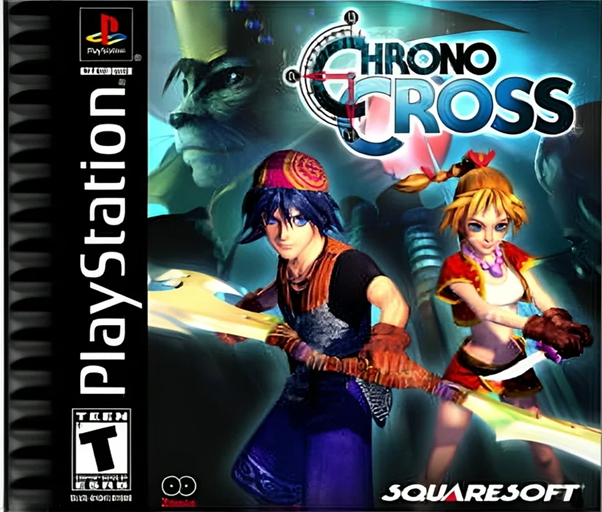
The spiritual sequel to Trigger, it weaves a multidimensional tale of parallel worlds, fate, and environmental themes. Recruit dozens of characters with intersecting stories, it’s complex but rewarding. The open world is an abundance of islands, explorable by boat, with vibrant biomes, hidden elements, and new game plus for alternate paths. Underrated but brilliant.
There you have it! These games from the golden age still hold up, if not outrun, proving great stories and open worlds don’t need fancy graphics, mass cut scenes, and voice overs. All these do is take away from the innovation, story depth, and world openness! If you haven’t played them, grab a classic, emulator, or remaster and dive in. What are your favorites? Let me know – thanks for hanging out!



 Homeschool Dad
Leave a comment